
Low-Voltage Wiring Installation in South Texas
Behind every functional business technology system — the network that connects your team, the phone system that handles your calls, the cameras that protect your facility, the audio that fills your space, and the displays that inform your customers — there is a low-voltage wiring infrastructure that either supports all of it reliably or quietly undermines it. Punchdown Communications installs professional low-voltage wiring systems for businesses, schools, healthcare facilities, government offices, and industrial operations across all of South Texas, including San Antonio, McAllen, Corpus Christi, Laredo, Brownsville, Harlingen, Edinburg, Mission, Del Rio, Eagle Pass, Alice, Victoria, Pharr, Weslaco, and every community throughout the Rio Grande Valley and South Texas Plains.
Contact Punchdown Communications today to schedule a free low-voltage wiring assessment for your South Texas facility.
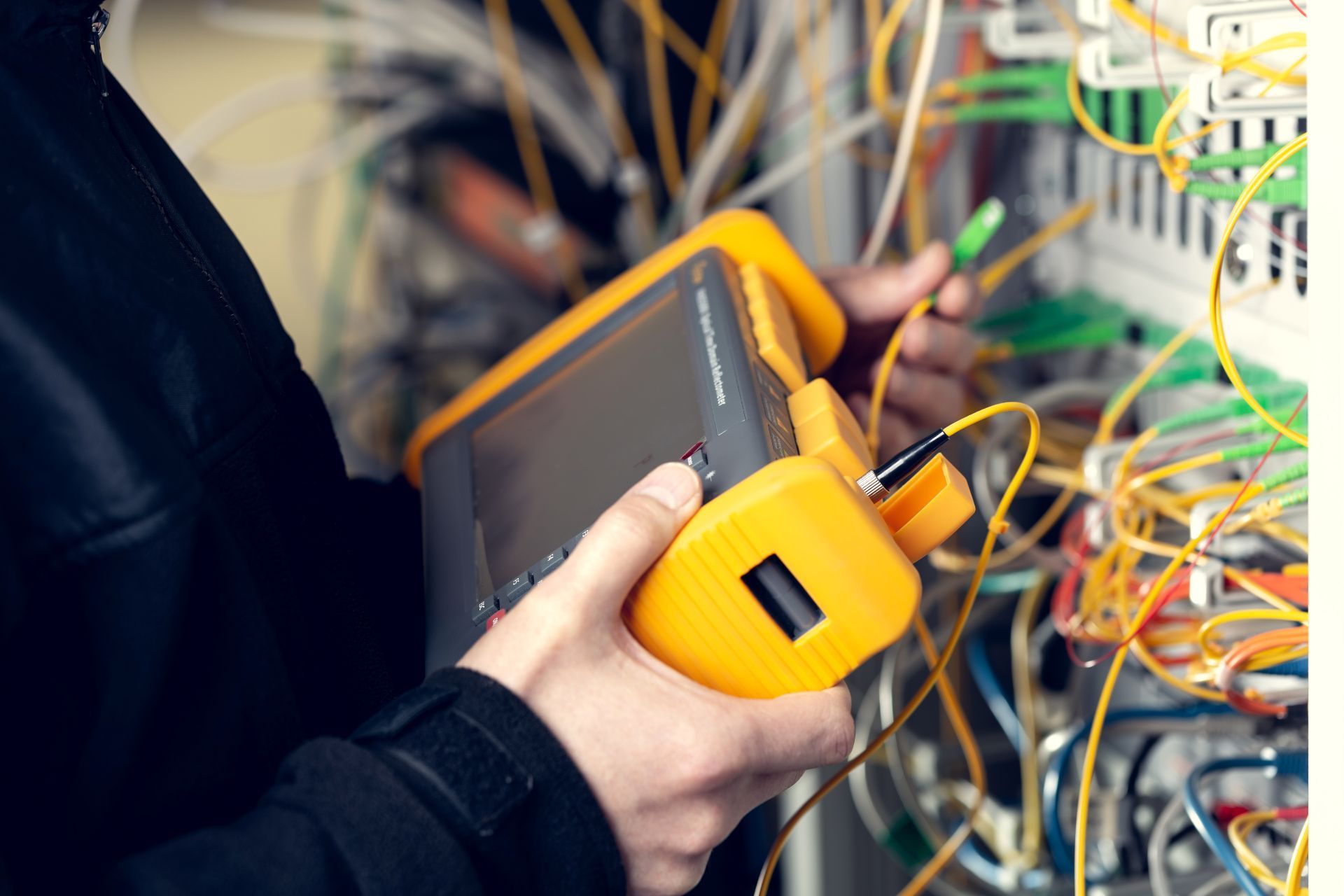
How Punchdown Communications Plans and Executes Low-Voltage Projects
Pre-Installation Site Survey and System Design
Every Punchdown Communications low-voltage project begins with a thorough site survey. For new construction projects, this involves reviewing architectural drawings, mechanical plans, and electrical layouts to identify pathway opportunities and conflicts. For retrofit projects, the site survey involves physically walking the facility to map ceiling access, conduit availability, and existing infrastructure.
Coordination With Other Trades
Low-voltage cabling in new construction must be coordinated with electrical, HVAC, and structural work to avoid conflicts that create code violations, performance problems, or rework costs. Punchdown Communications coordinates directly with general contractors and other trades throughout the installation process.
Labeling, Documentation, and Closeout
Every cable installed by Punchdown Communications is labeled at both ends with a consistent identification scheme. As-built documentation is prepared reflecting the actual installed infrastructure and delivered to the client at project closeout.
Talk to Punchdown Communications about your low-voltage wiring project in South Texas — we plan every detail before pulling the first cable.
What Low-Voltage Wiring Encompasses in a Commercial Building
Network and Data Cabling
Cat5e, Cat6, and Cat6A horizontal cabling connects workstations, servers, wireless access points, VoIP phones, and networked devices to the facility's switching infrastructure. This is the most pervasive low-voltage system in any commercial building.
Voice and Telephone Cabling
VoIP phone systems use the same Cat6 data cabling infrastructure for both voice and data, powered through PoE from network switches. Legacy analog and digital phone systems use dedicated voice-grade cabling that Punchdown Communications installs and terminates to match the specifications of the phone system being deployed.
Fiber Optic Backbone Cabling
Single-mode and multimode fiber optic cabling connects equipment rooms, distribution frames, and separate buildings as the backbone layer of the network infrastructure in virtually every multi-floor or multi-building commercial project.
Security and Camera Cabling
IP camera systems, access control readers, electric door strikes, magnetic locks, motion detectors, alarm panels, and intercom systems all require low-voltage cabling installed to specific performance and routing standards.
Audiovisual and Multimedia Cabling
Conference room displays, digital signage, distributed audio systems, video walls, and presentation systems require dedicated AV cabling — HDMI, HDBaseT, speaker wire, and control cabling — installed with the same care and organization as network and security infrastructure.
Cabling Infrastructure for Security Systems
Every IP camera in a professionally installed security system is connected through a certified Cat6 cable run that delivers both network connectivity and Power over Ethernet to power the camera without a separate electrical connection at the mounting location.
PoE Cabling for IP Cameras
IP cameras are powered through the same Cat6 cable that carries their video data. Higher-resolution cameras with integrated IR illuminators, heaters, or pan-tilt-zoom motors may require PoE+ or PoE++ power levels. Punchdown Communications specifies and installs cabling sized for the PoE requirements of each camera position.
Outdoor and Conduit Cabling
Camera positions on building exteriors, in parking lots, along fence lines, and on light poles require outdoor-rated cabling installed in weatherproof conduit with properly sealed entry points into the building. Punchdown Communications installs exterior camera cabling with UV-rated conduit, weatherproof junction boxes, and properly sealed wall penetrations.

Access Control Integration
Camera systems are most effective when integrated with access control infrastructure that correlates video footage with entry and exit events at controlled doors, gates, and secure areas. Punchdown Communications installs the cabling infrastructure that supports access control readers, electric door strikes, magnetic locks, and control panels.
Schedule your South Texas camera and security installation with Punchdown Communications — professional design, certified cabling, and complete documentation on every project.
FAQ"S
Frequently Asked Questions About Camera & Security Installation in South Texas
What is the difference between an IP camera system and a traditional analog CCTV system?
Analog CCTV systems transmit video as an analog signal over coaxial cable to a digital video recorder. IP camera systems convert video to digital data at the camera itself and transmit it over standard Cat6 network cabling to a network video recorder. IP systems deliver significantly higher resolution, remote accessibility, intelligent analytics capabilities, and a scalable architecture.
How many cameras does my South Texas business need?
Camera count depends on the physical layout of the facility, the number of entry and exit points that require coverage, the size of parking areas and outdoor spaces, and the level of interior coverage required. Punchdown Communications conducts a site survey that maps every camera position required to achieve comprehensive coverage without blind spots.
What camera resolution do I need for useful security footage?
For most commercial applications, 4 megapixel or higher resolution is the current practical standard. At this resolution, footage contains sufficient detail to identify individuals, read license plates at appropriate distances, and capture the level of detail needed to support law enforcement investigations.
How much footage storage does my security system need?
Storage requirements are calculated based on camera count, recording resolution, frame rate, whether recording is continuous or motion-triggered, and the required retention period. Punchdown Communications performs accurate storage calculations during the design phase so the NVR is sized correctly from day one.
Can IP cameras work without an internet connection?
Yes. IP cameras record to a local NVR regardless of whether the facility has internet connectivity. Internet connectivity is required only for remote viewing and mobile access features. Local recording, motion detection, and all camera functions operate independently of the internet connection.
How are outdoor cameras protected from South Texas weather conditions?
Outdoor IP cameras are specified with a minimum IP66 rating, which provides complete protection against dust and powerful water jets. In coastal areas near Corpus Christi and the lower Rio Grande Valley where salt air accelerates corrosion, camera housings and mounting hardware are selected for their corrosion resistance.
Can a new camera system be integrated with an existing access control system?
Integration between camera systems and access control platforms depends on whether both systems support compatible integration protocols. Many modern IP camera NVR platforms support integration with leading access control systems through APIs or dedicated integration modules.
What happens to my security footage if the NVR is stolen or damaged?
For facilities where NVR theft or physical damage is a concern, Punchdown Communications recommends NVR configurations that include off-site or cloud backup recording, RAID storage arrays that protect against drive failure, and secure NVR mounting locations not accessible from monitored areas.
Does Punchdown Communications provide ongoing support after the security system is installed?
Yes. Punchdown Communications provides troubleshooting and support services for installed camera and security systems, including camera replacement, NVR maintenance, cabling repairs, and system expansion as your facility's security requirements evolve.
What South Texas areas does Punchdown Communications serve for camera and security installation?
Punchdown Communications installs camera and security systems throughout all of South Texas, including San Antonio, McAllen, Laredo, Corpus Christi, Brownsville, Harlingen, Edinburg, Mission, Del Rio, Eagle Pass, Alice, Victoria, Pharr, Weslaco, Mercedes, and all surrounding communities.